A micro influencer is a creator with roughly 10,000 to 100,000 followers; a nano influencer has roughly 1,000 to 10,000. Nano accounts usually post the higher engagement rate. In 140 public Instagram profiles audited by Instapect, the median engagement rate was 2.44% for nano accounts and 0.35% for micro accounts, and HypeAuditor's 2026 report shows the same direction across a far larger sample (1.78% nano, 0.54% micro). The often-quoted "micro influencers get 3% to 7%" describes the top of the tier, not the typical account: only 3 of the 22 micro accounts in the audits cleared 3%.
That gap is the useful part. Follower count tells you the tier. It does not tell you whether a specific creator's audience still talks back, and that is the question worth paying for.
Disclosure: Instapect publishes this guide and makes one of the tools mentioned below. Every method here works without it, with a calculator, a spreadsheet and the creator's own Instagram Insights.
Key takeaways
| Question | Short answer (October 2026) |
|---|---|
| What is a micro influencer? | A creator with about 10K to 100K followers. Some sources cap it at 50K |
| What is a nano influencer? | A creator with about 1K to 10K followers. Some sources start at 500 |
| Who gets the higher engagement rate? | Nano. Median 2.44% vs 0.35% in Instapect audits; 1.78% vs 0.54% in HypeAuditor's 2026 data |
| Do micro influencers really get 3% to 7%? | A minority do. 3 of 22 audited micro accounts (14%) cleared 3%; for nano it was 13 of 27 (48%) |
| What separates good micro accounts? | Conversation. Creator-led micro accounts had a median 1.18% rate and 9.7 comments per 100 likes; business pages in the same tier had 0.12% |
| What do they cost? | Nano: about $10 to $300 per Instagram feed post. Micro: about $150 to $1,500. Sources disagree widely (see the pricing table) |
| Are micro influencers worth it? | When you vet each one on median engagement and comments, yes. Follower count alone is a poor buying signal at this size |
| How to check one in 5 minutes | Median engagement rate over the last 12 posts, comments per 100 likes, then ask for Insights screenshots of reach and audience location |
What is a micro influencer, and how many followers do they have?
A micro influencer has between about 10,000 and 100,000 followers and a recognisable niche. That is the most common definition, used by Later and repeated in Google's AI Overview for the term. It is a convention, not a rule set by Instagram, and the edges move from source to source.
| Source (date) | Nano | Micro | Macro | Mega |
|---|---|---|---|---|
| Later (July 7, 2026) | 1K to 10K | 10K to 100K | 100K to 1M | 1M+ |
| HypeAuditor Help Center (July 9, 2026) | About 1K to 10K | About 10K to 50K | Not defined on the page | Over 1M (in its 2026 report) |
| Shopify (September 6, 2024) | 500 to 9,999 | 10,000 to 49,999 | 100,000 to 499,999 | 500,000+ |
So is 10K a micro influencer? By every definition above, yes: 10,000 followers is the entry point to the micro tier. Is 50K? By Later's definition yes; by HypeAuditor's and Shopify's it sits at the top edge or just past it. When a brand brief says "micro", ask which cut-off it uses before you shortlist.
The label also says nothing about who the account is. In the Instapect audits, 9 of the 22 accounts with 10K to 100K followers were business pages by their own Instagram category (clothing stores, a car dealer, a school, a freight company). They have micro-sized follower counts but behave like brands, not creators. That matters for the engagement numbers below.
What is a nano influencer?
A nano influencer is a creator with roughly 1,000 to 10,000 followers, often a person whose audience overlaps with their real-world circle: a local baker, a running-club captain, a student reviewing campus food. HypeAuditor notes that some definitions start at a few hundred followers.
Nano is also the tier most creators are in. In HypeAuditor's 2026 State of Influencer Marketing report, as reported by EMARKETER on February 24, 2026, 81.5% of Instagram influencers were nano and 14.4% were micro; accounts over 1 million made up 0.1%.
What nano accounts trade away is volume. HypeAuditor's figure for micro accounts is a median of 91 likes per post, against 6,678 for accounts over 1 million. A nano post reaches fewer people still, so a nano campaign only works at scale: ten or twenty creators, not one.
Nano vs micro vs macro: who gets the most engagement?
Engagement rate falls as follower count grows, and the biggest drop happens between nano and micro. Two independent data sets, very different in size, agree on the direction.
| Tier | Instapect audits: median rate (accounts) | Median-post rate | HypeAuditor 2026 (Instagram) |
|---|---|---|---|
| Under 1K | 15.29% (25) | 10.58% | Not reported |
| Nano, 1K to 10K | 2.44% (27) | 1.28% | 1.78% |
| Micro, 10K to 100K | 0.35% (22) | 0.21% | 0.54% (10K to 50K) |
| Macro, 100K to 1M | 0.30% (20) | 0.28% | Not reported in the summary |
| Mega, 1M+ | 0.53% (46) | 0.33% | 0.33% |
| Platform average, all accounts | 0.48% (Socialinsider, 35M posts, 2025) |
How the Instapect numbers are calculated. Engagement rate by followers = (average likes + average comments per post) ÷ followers × 100, over each account's most recent feed posts, pinned posts excluded. The median-post rate uses the account's median post instead of the average, which strips out one viral post. The table reports the median account in each tier. The full method is in the engagement rate guide.
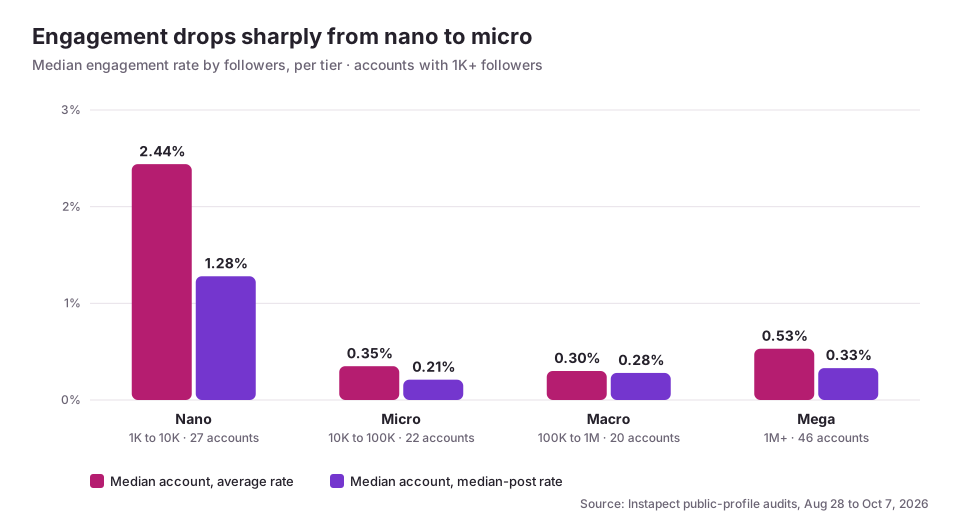
Two things in that table need a plain reading.
First, the under-1K tier is not a hidden goldmine. Accounts that small are mostly followed by friends and family, who like nearly everything. A 15% rate there tells you about loyalty, not about how a stranger would react to a sponsored post.
Second, micro coming in below mega in the Instapect sample is mostly about who is in it. Split the 22 micro accounts by their Instagram category and the picture changes:
| Micro tier (10K to 100K), Instapect audits | Accounts | Median engagement rate | Median comments per 100 likes |
|---|---|---|---|
| Creators and personal accounts | 13 | 1.18% | 9.7 |
| Business pages (stores, clinics, a school, a dealer) | 9 | 0.12% | 4.3 |
Creator-led micro accounts sit more than twice the platform average. Business pages with the same follower count sit at a quarter of it. If you are buying influence, you are buying the first group, and the tier label alone will not separate them for you.
Do micro influencers really get 3% to 7% engagement?
Some do, but they are the exception. Google's AI Overview and many agency blogs say micro influencers "typically" see 3% to 7%. Neither the Instapect audits nor HypeAuditor's much larger data set supports "typically".
| Tier | Share of audited accounts at 1% or higher | Share at 3% or higher |
|---|---|---|
| Under 1K | 25 of 25 (100%) | 21 of 25 (84%) |
| Nano, 1K to 10K | 20 of 27 (74%) | 13 of 27 (48%) |
| Micro, 10K to 100K | 7 of 22 (32%) | 3 of 22 (14%) |
| Macro, 100K to 1M | 7 of 20 (35%) | 5 of 20 (25%) |
| Mega, 1M+ | 14 of 46 (30%) | 4 of 46 (9%) |
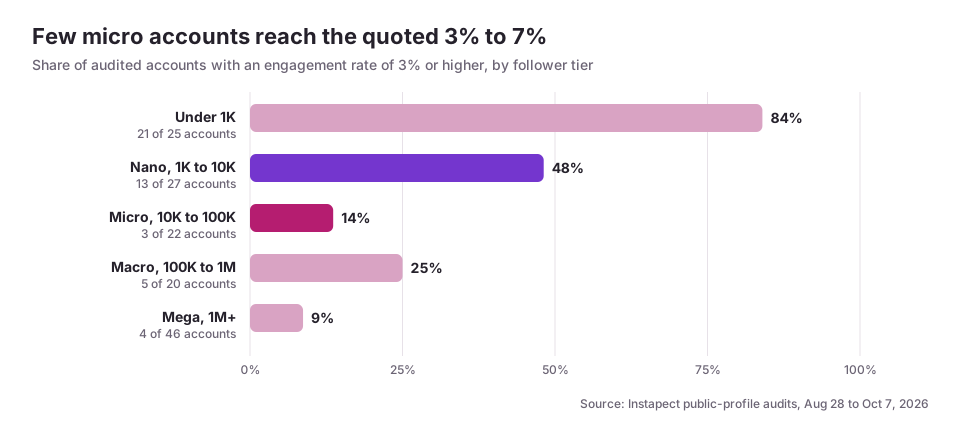
A micro creator at 3% or more is real and worth finding. One example from the public audits: @mazani.khonesh (93,542 followers, retrieved September 9, 2026) averaged 6.93%, with a median post at 4.25%. That is the top of the tier. Plan a budget around 3% to 7% and most of the creators you contact will miss it.
Comment ratio: the signal follower tiers hide
Comments per 100 likes measures whether an audience talks back, and it holds up better than engagement rate as accounts grow. It is calculated as average comments ÷ average likes × 100. A like costs a follower a tap. A comment costs a sentence.
| Tier (Instapect audits) | Median comments per 100 likes | Accounts under 1 comment per 100 likes |
|---|---|---|
| Under 1K | 7.4 | 1 of 25 |
| Nano, 1K to 10K | 3.3 | 6 of 27 |
| Micro, 10K to 100K | 6.0 | 4 of 22 |
| Macro, 100K to 1M | 3.0 | 3 of 20 |
| Mega, 1M+ | 1.1 | 21 of 46 |
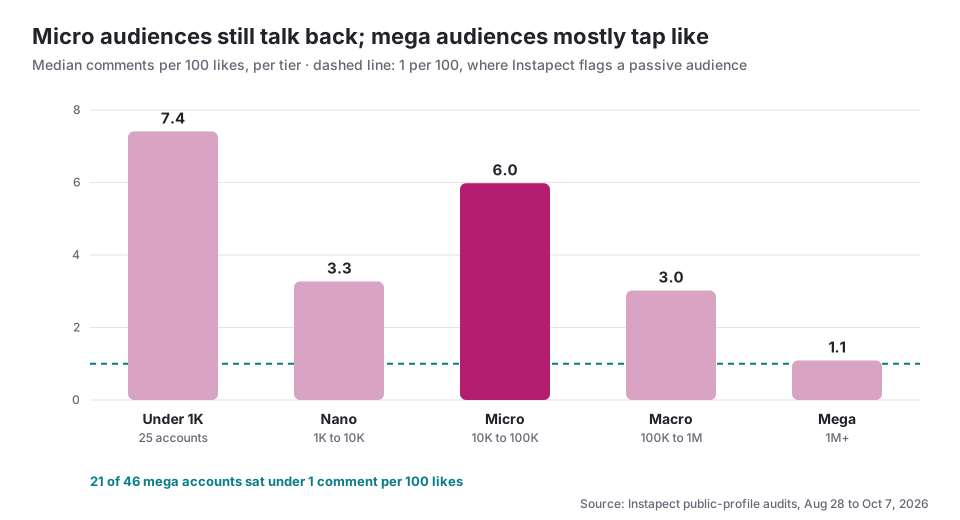
This is where micro accounts earn their reputation. The median micro account in the audits drew about six comments for every 100 likes, more than five times the 1.1 of accounts above a million followers, and nearly half of those mega accounts (21 of 46) fell under one comment per 100 likes. Instapect's reports flag anything under 1 per 100 as a passive audience.
Read the comments, not just the count. A very high ratio can mean a giveaway ("tag 3 friends") rather than conversation. @saurabh_dee (44,569 followers, retrieved September 11, 2026) recorded 49.4 comments per 100 likes, which is unusual in any tier; open the posts and check what people actually wrote before treating that as loyalty.
Are micro influencers worth it?
Yes, when you pay for the creators who beat their tier, not for the tier. The economics work out once you price per interaction instead of per follower.
What creators charge (2026 published ranges):
| Source (date) | Nano, Instagram feed post | Micro, Instagram feed post | Macro |
|---|---|---|---|
| Later (July 7, 2026) | $100 to $300 | $500 to $1,500 | $2,500 to $10,000+ |
| Influencer Marketing Hub (updated July 7, 2026) | Not on this page | $150 to $500 | Not on this page |
| Shopify (September 6, 2024) | $10 to $100 | Not on this page | $10,000+ for 500K+ |
Neither Later nor Influencer Marketing Hub publishes the sample behind these ranges, and they disagree by a factor of three on micro pricing. Treat them as opening positions in a negotiation.
What that buys, per interaction. The arithmetic below applies the tier medians above to a hypothetical account in each tier. It is illustrative, not a forecast for any creator.
| Scenario | Followers | Rate used | Interactions per post | Price range | Cost per interaction |
|---|---|---|---|---|---|
| Typical nano | 5,000 | 1.28% (nano median post) | About 64 | $10 to $300 | $0.16 to $4.69 |
| Typical micro, any account | 50,000 | 0.21% (micro median post) | About 105 | $150 to $1,500 | $1.43 to $14.29 |
| Creator-led micro | 50,000 | 1.18% (creator median) | About 590 | $150 to $1,500 | $0.25 to $2.54 |
The middle row is why some brands give up on micro influencers: an average account at a high quote is expensive attention. The last row is why others keep using them. A creator-led micro account at the median of its own group delivers about five times the interactions of the tier as a whole, for the same fee.
When nano is the better buy: local businesses, product seeding, user-generated content you want to reuse, and launches where 15 small voices beat one medium one. When micro is the better buy: a niche with an established expert voice (skincare, climbing, indie games), content you need to look professional, and campaigns where one creator must reach tens of thousands of people.
How to vet a micro or nano influencer with public data
Five checks, about five minutes per creator, no paid tool required. Each step says what a pass looks like.
- Confirm the tier and the account type. Open the profile and note the follower count and the category label under the name. A "Clothing store" with 40K followers is a brand page, not a micro influencer. Pass: a person or creator brand in your niche.
- Calculate the average and the median engagement rate over the last 12 posts. Add likes and comments per post, divide by followers. Do it in a spreadsheet using the engagement rate guide, or paste the handle into the engagement rate calculator, which shows both. Pass: the median clears the tier median (2.44% nano, 0.35% micro; above 1% is strong for micro).
- Compare average to median. If the average is 1.5 times the median or more, one post is carrying the account. @kuchulu.ai (52,868 followers, retrieved September 9, 2026) averaged 1.97% but its median post sat at 0.72%, a 2.7x gap. Pass: average under 1.5x the median, or a clear reason for the spike.
- Check comments per 100 likes and read 20 comments. Pass: 3 or more per 100 likes, with comments that respond to the post. Fail signals: under 1 per 100, or walls of emoji and "nice pic" from accounts with no posts.
- Ask the creator for Instagram Insights screenshots. Reach, accounts engaged, and audience top locations and age range are private. Only the creator can see them, under Profile > Professional dashboard > Account insights. Pass: most of the audience is in the countries you sell to, and reach per post is in line with the follower count.
Verify before you pay for a second post. Use the creator's own median as the yardstick. Record the sponsored post's likes and comments 48 hours after it goes live and divide by the creator's median post. A practical rule of thumb: if the sponsored post lands under half of the median, the audience did not respond to the brief, and that is worth discussing (with the post's Insights in hand) before you book again.
What public data cannot tell you. Any audit built on public signals, Instapect included, sees posts, visible likes and comments, captions, hashtags, posting times and follower counts. It cannot see reach, impressions, story views, audience demographics or private accounts, and it cannot prove whether followers are fake. Step 5 exists for that reason.
Which tools help you find and check micro influencers?
| Tool | What it is for | Cost | Limits |
|---|---|---|---|
| Instagram search and hashtags | Finding creators in a niche or city | Free | Slow; no metrics |
| Instagram Insights (creator's own) | Reach, audience location and age | Free, but only the creator can open it | You depend on screenshots |
| Spreadsheet + the formula above | Average and median engagement rate | Free | 10 to 15 minutes per creator |
| Instapect | Average and median engagement, comments per 100 likes and tier standing for any public profile | Free summary; detailed report needs a free account | Public signals only; no audience data, no fake-follower detection |
| HypeAuditor, Modash, Upfluence | Creator databases with search filters and audience estimates | Check each vendor's pricing page | Audience figures are modelled estimates, not Insights data |
| Collabstr | Marketplace where creators list packages and prices | Check the site | Only creators who signed up are listed |
Instapect's public directory also groups audited accounts by category, which works as a shortlist starting point: see creators and brands.
Common mistakes when choosing between nano and micro influencers
| Mistake | What goes wrong | Do this instead |
|---|---|---|
| Buying by follower count | Business pages and inactive audiences pass the filter | Filter by median engagement and account type first |
| Budgeting on "3% to 7%" | Most micro creators deliver under 1% | Plan on the tier median; treat 3%+ as an upside |
| Using the average only | One viral post inflates the number | Compare average and median; plan around the median |
| Comparing a 5K account with a 50K account | The nano always looks better on rate | Compare within the same tier, then compare cost per interaction |
| Skipping the Insights request | You pay for an audience in the wrong country | Ask for audience location before you sign |
| Treating a high comment count as trust | Giveaways inflate comments | Read a sample of comments |
Methodology and limits of the Instapect data
- Sample: 140 public Instagram accounts audited by Instapect between August 28 and October 7, 2026, after a quality bar: at least 6 usable recent posts, no hidden like counts, follower count above zero, not delisted.
- Metrics: engagement rate by followers (average likes + average comments ÷ followers × 100), median-post engagement rate, and comments per 100 likes (average comments ÷ average likes × 100), each calculated from recent feed posts with pinned posts excluded.
- Who is in it: accounts people chose to audit, so the set leans toward celebrities, media and sports brands, small businesses and creators checking their own numbers. It is not a random sample of Instagram.
- Small tiers: 20 to 46 accounts per tier, and 13 versus 9 in the creator-versus-business split. Treat tier figures as directional and pair them with HypeAuditor's and Socialinsider's large samples, which point the same way.
- Account type was taken from the category each account displays on Instagram. Accounts without a category were counted as creators or personal accounts.
Frequently asked questions
How many followers do you need to be a micro influencer?
About 10,000. Most definitions, including Later's 2026 pricing guide, put micro influencers at 10,000 to 100,000 followers. HypeAuditor and Shopify cap the tier at 50,000, so an account with 60,000 followers is micro under one definition and mid-tier under another.
Is 10K followers a micro influencer?
Yes. 10,000 followers is the lower bound of the micro tier in every major definition. Below that, from about 1,000 followers, the account is a nano influencer.
What is the difference between a nano and a micro influencer?
Size and behaviour. Nano influencers have about 1K to 10K followers and higher engagement rates (median 2.44% in Instapect audits, 1.78% in HypeAuditor's 2026 data). Micro influencers have 10K to 100K followers, lower rates (0.35% and 0.54%), more reach per post and higher prices.
What is a good engagement rate for a micro influencer?
Above 1% is strong, and above 3% puts a micro account in roughly the top seventh of the Instapect sample. The median micro account in the audits sat at 0.35%, and creator-led micro accounts at 1.18%.
How much should I pay a micro influencer?
Published 2026 ranges run from $150 to $500 per Instagram feed post (Influencer Marketing Hub) to $500 to $1,500 (Later). Price against expected interactions: divide the fee by followers × the creator's median engagement rate.
The micro influencer I hired got far fewer likes than their usual posts. What went wrong?
Start by comparing it with the creator's own median post, not their best one. If the sponsored post landed under half of that median 48 hours after publishing, the likely causes are a brief that did not fit the audience or an audience smaller than the follower count suggests. Ask for the post's Insights (reach and accounts engaged) before booking again.
A nano influencer shows a 15% engagement rate. Is that fake?
Not necessarily. Under 1,000 followers, the median account in the audits had a 15.29% rate because followers are mostly people who know the creator. Check the comments: real friends write real sentences. Instapect does not run fake-follower detection, and no public-data tool can prove followers are fake.
My engagement rate dropped when I passed 10K followers. Did I do something wrong?
Probably not. Rates fall as audiences grow because new followers interact less than early ones; the audit median drops from 2.44% for 1K to 10K accounts to 0.35% for 10K to 100K. Compare yourself with the micro tier now, and track comments per 100 likes, which held at about 6 for micro accounts.
Are nano influencers worth it for small businesses?
Often, yes. Nano creators cost $10 to $300 per feed post across the sources above, post the highest engagement rates of any tier beyond friends-and-family accounts, and are often local to the business. The trade-off is reach: plan on working with several at once.
What is a macro influencer?
A creator with about 100,000 to 1 million followers by Later's definition (Shopify uses 100,000 to 499,999). Macro accounts in the audits had a 0.30% median engagement rate and 3.0 comments per 100 likes, and Later lists $2,500 to $10,000+ per post.
The short version
Choose the tier by the job: nano for trust, local reach and volume of voices; micro for niche authority and reach per post. Then ignore the tier and vet the creator. In the Instapect audits, the gap inside the micro tier (1.18% for creators, 0.12% for business pages) was bigger than the gap between micro and mega. A median engagement rate above the tier median, three or more comments per 100 likes, and audience screenshots from Insights will tell you more than the follower count.
To check a shortlist quickly, paste each handle into the engagement rate calculator or work through the engagement rate guide with a spreadsheet. If you also schedule the sponsored posts, the best time to post on Instagram guide covers timing.